StopNCII.org
Active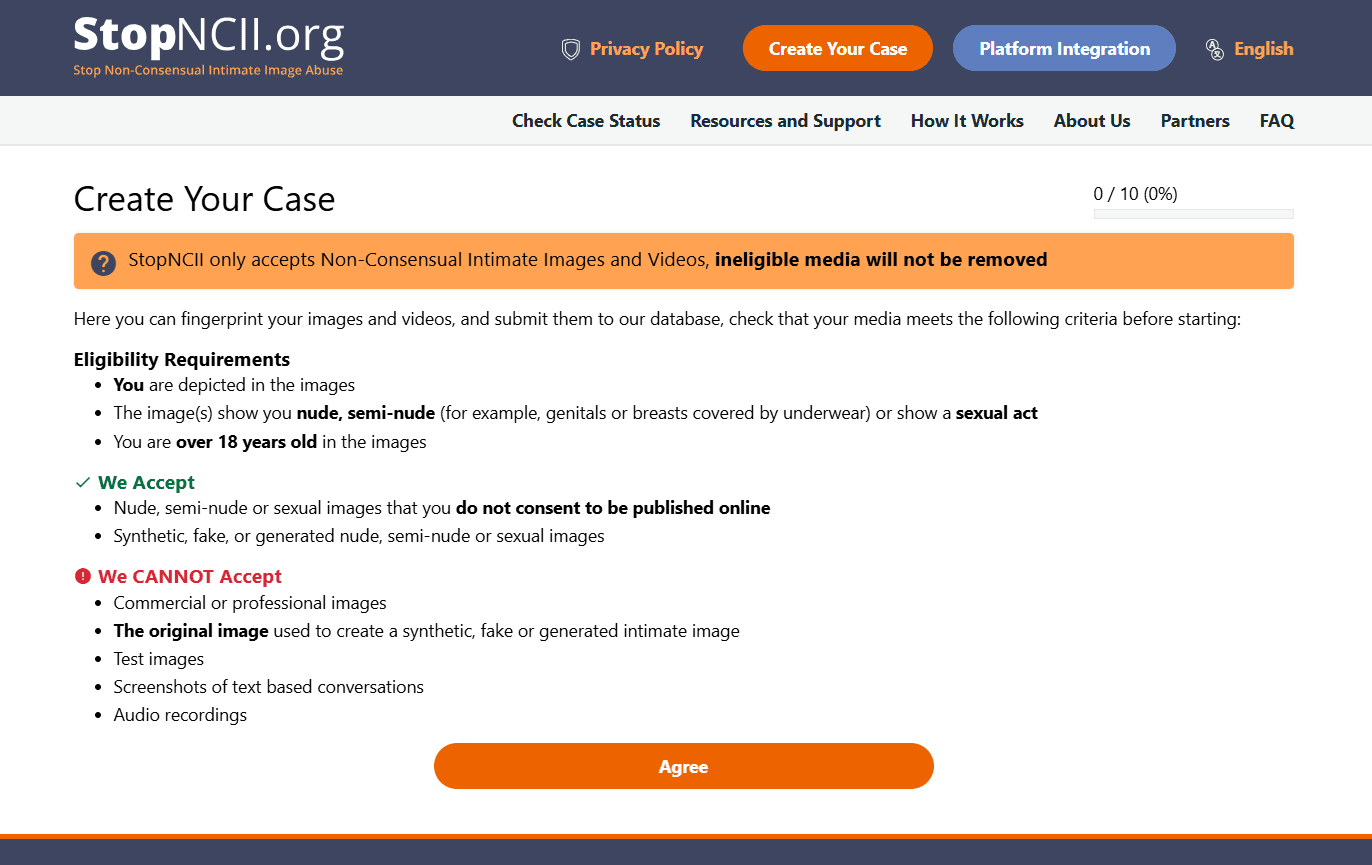
StopNCII.org uses on-device hashing technology to prevent the non-consensual sharing of intimate images online. People concerned about intimate image abuse can create unique identifiers of their images, (also known as ‘hashes’ or digital fingerprints) from their own device. Only hashes are then shared with StopNCII.org, not the original image (or video), ensuring that the intimate content never leaves the user’s device. Hashes are then shared with participating partners and if an image is uploaded to one of these sites, matches the corresponding hash, and meets partner policy requirements, the image will be sent for moderation. If the image meets the criteria of an intimate image, it will be removed and blocked from being shared further across partner platforms.
✓ Endorsed
it's a safe and intuitive tool that can help people affected by the image-based abuse remove the harmful content from the partnering platforms. The creators also offer a range of partnership pathways designed to suit different types of organisations, incl. integration of the tool.
✓ Best fit for
adults whose intimate images have been posted without their consent on partner platforms like Bumble, Meta, Pornhub, OnlyFans etc.
✕ Not ideal for
Not yet recorded.
Safety criteria— by category, in rubric order
Privacy & data · 20% of score
81% · 8/8 rated
- Core content accessible without creating an account— Yes
- No PII collected by default (name, email, IP, location)— Yes
- Privacy policy in plain language with a short summary— Yes
- User data not sold or shared with third parties— Partially
- Option to use pseudonym or alternative name— Yes
- No auto-save of form content (shared device risk)— Yes
- Opt-in (not opt-out) consent — granular and revocable— Yes
- End-to-end encryption used where applicable— No
Safety by design · 20% of score
50% · 2/6 rated
- Quick-exit button present (redirects discreetly to neutral page)— No
- Content warnings before sensitive or triggering content— N/A
- Disguised notifications or discreet app icon option— N/A
- No "people you may know" feature that could expose users to abusers— N/A
- Two-factor authentication available— Yes
- Safe alternative contact options supported (distinct from personal accounts)Not assessed— Not assessed
Agency, consent & participatory design · 15% of score
80% · 5/7 rated
- User controls what information is public vs. private— Yes
- Multiple content formats available (video, text, audio)— N/A
- Self-paced use possible — no forced sequential flows— N/A
- User can opt out of tracking and cookies— Yes
- Survivors co-designed AND co-iterated — not consulted once only— No
- Tool does not force a single pathway (e.g. 'call police' only)— Yes
- Feedback mechanism exists for users to flag issues or suggest content— Yes
Accessibility, equity & inclusion · 15% of score
72% · 9/9 rated
- Available in more than one language— Yes
- Free to use — no paywall for core content— Yes
- Mobile-friendly / responsive design— Yes
- WCAG 2.1 AA accessibility compliance documented— No
- Gender-neutral, non-stigmatising language throughout— Yes
- Covers intersectional forms of GBV — not single-issue only— Yes
- Works on low bandwidth / poor connectivity— No
- Not geographically restricted in access— Yes
- Mitigates risks for users on shared or monitored devices— Partially
Transparency & accountability · 10% of score
50% · 5/6 rated
- Creator / organisation clearly identified on the tool— Yes
- Last update date visible (signals active maintenance)— Partially
- Scope and limitations clearly stated — including what the tool cannot do— Yes
- Funding sources disclosed— No
- Methodology publicly documented— No
- Content aligned with global GBV/HP standards and reviewedNot assessed— Not assessed
Tone & trauma-informed UX · 10% of score
100% · 5/5 rated
- No graphic or violent imagery — no sensationalised depictions of violence— Yes
- Uses "survivor" rather than "victim" language throughout— Yes
- Warm, non-judgmental, validating tone throughout the interface— Yes
- Visuals are empowering and gender-diverse — not stereotyping— Yes
- Does not minimise or hierarchise different forms of abuse— Yes
AI & algorithmic ethics · 5% of score
N/A · 0/5 rated
- Clearly states if and how AI is used in the tool— N/A
- Clearly states what AI is usedNot assessed— Not assessed
- Provides details of how user's inputs are processed/ saved/ shared with third parties.Not assessed— Not assessed
- Chatbots / automated tools clearly identify themselves as non-human— N/A
- Human escalation pathway available when AI cannot safely respond— N/A
Sustainability & feminist tech ethos · 5% of score
50% · 2/3 rated
- Led or co-led by women, gender-diverse people, or Global Majority organisations— Yes
- Openly licensed — can be used, remixed or adapted by others— No
- Clearly states compliance with feminist values or trauma-informed design or survivor-centred approachNot assessed— Not assessed
See the Transparency page for how the weighted score and bands are calculated.